



Laser is everywhere. Laser cutting has become one of the most discussed technologies in steel profile fabrication. High-tech. Precise. Efficient. And in many cases, that reputation is well deserved. In other cases, however, plasma or oxyfuel cutting outperform laser and provide a better, more cost-effective solution.
But the real question is: Is laser the right choice for your application?
We’ll guide you through the pros and cons, including a handy comparison table of the three cutting technologies.
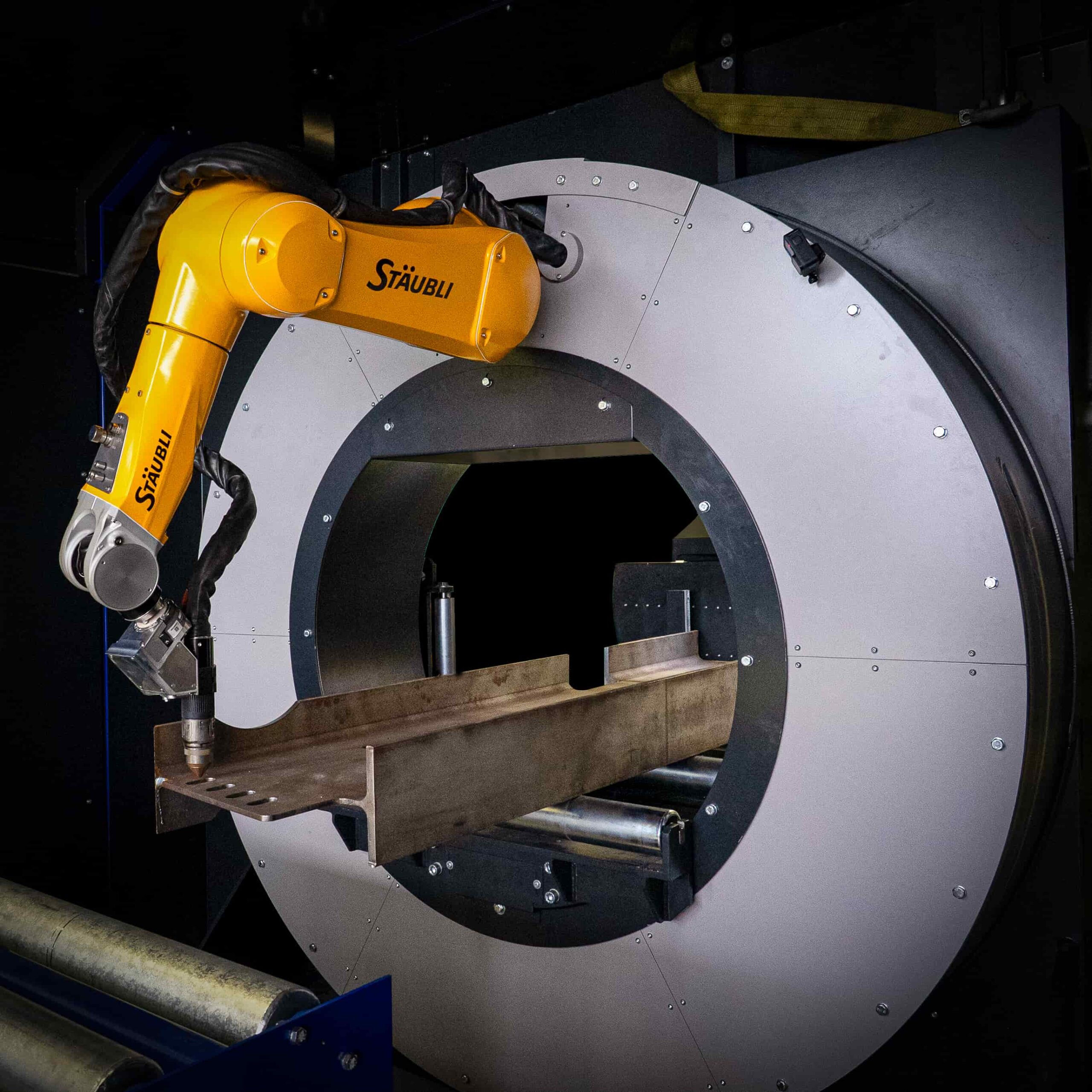
Looking for a 3D laser cutter for steel profiles? In some cases, laser is exactly what you need. In others, plasma or oxyfuel solutions will deliver a more robust and cost-effective result. Because in structural steel processing, it’s not just about the cutting technology. Geometry, material thickness, weld preparation and downstream fit-up all determine what actually works in production.
At HGG, we approach this from a process perspective. Not as a choice between technologies, but as a way to achieve the best possible result on the shop floor. That means understanding when laser adds value, and when proven technologies such as plasma or oxyfuel are simply the better fit.
Why laser is gaining momentum
Laser cutting continues to grow in popularity across the industry. Not just because of its high-tech image, but because of clear technical advantages that make it attractive for a wide range of applications.
In the context of steel profiles and 3D cutting, these advantages become especially visible when precision and repeatability are critical.
- High precision and repeatability
Laser cutting enables tight tolerances and highly consistent results. This is particularly valuable for components that require accurate fit-up in downstream processes such as welding or assembly. - Clean cuts with minimal distortion
The focused energy input results in a small heat-affected zone, limiting deformation and preserving the geometry of the profile. This improves dimensional accuracy and reduces correction work later in the process. - High performance in thinner materials
Laser performs especially well in thin to medium material thicknesses, where it combines cutting speed with excellent edge quality. In these ranges, it can significantly outperform other cutting technologies. - Strong potential for automation and integration
Laser systems are often combined with advanced software and automation. This enables efficient workflows, repeatable production and integration into larger production environments.
Where laser truly adds value
Laser performs exceptionally well when the application aligns with its strengths. In steel profile and 3D cutting, this typically means controlled conditions, predictable geometries and a clear focus on precision.
These are five use cases where laser consistently adds value in steel profile fabrication:
- Thin to medium material thickness
In thinner materials, laser achieves high cutting speeds while maintaining excellent edge quality. This makes it particularly effective for profiles where both productivity and accuracy are important. - High-precision features
Laser produces clean, round holes and flat edges. This improves fit-up in downstream processes such as welding and assembly and reduces the need for manual correction. - Minimal post-processing
Under optimal conditions, parts often require little to no finishing. This reduces total production time and simplifies the overall workflow. - Repeatable production quality
Once the process is stable, laser delivers consistent results over time. This is especially valuable in series production where reliability and predictability are key. - Predictable geometries
Laser performs best when cutting paths are consistent and well-defined. In these cases, the process can be optimized for both speed and quality.
In short: Laser delivers the most value in controlled, precision-driven applications where repeatability and fit-up quality are critical.
Laser cutting delivers the most value on thin to medium steel profiles (typically 3 to 20 mm / 1/8–3/4 in) where precision, repeatability, and edge quality matter most. For thicker structural sections, complex bevel preparations, or variable production conditions, plasma or oxyfuel cutting typically deliver more robust and cost-effective results.
Understanding the process: where it becomes more complex
Laser cutting is a powerful process, but also a sensitive one. It operates within a relatively small process window, meaning that even small variations can have a significant impact on the result.
The four main scenarios to consider:
- Sensitivity to variation
Changes in material condition, coating or batch quality can affect cut stability. This can result in inconsistent cut quality, increased scrap or the need for additional process adjustments. - Dependence on process control
Accurate parameter settings and stable machine conditions are essential. Without this level of control, the process can become unstable, leading to variability in output and reduced reliability in production. Achieving and maintaining these conditions requires a skilled operator. - More complex applications
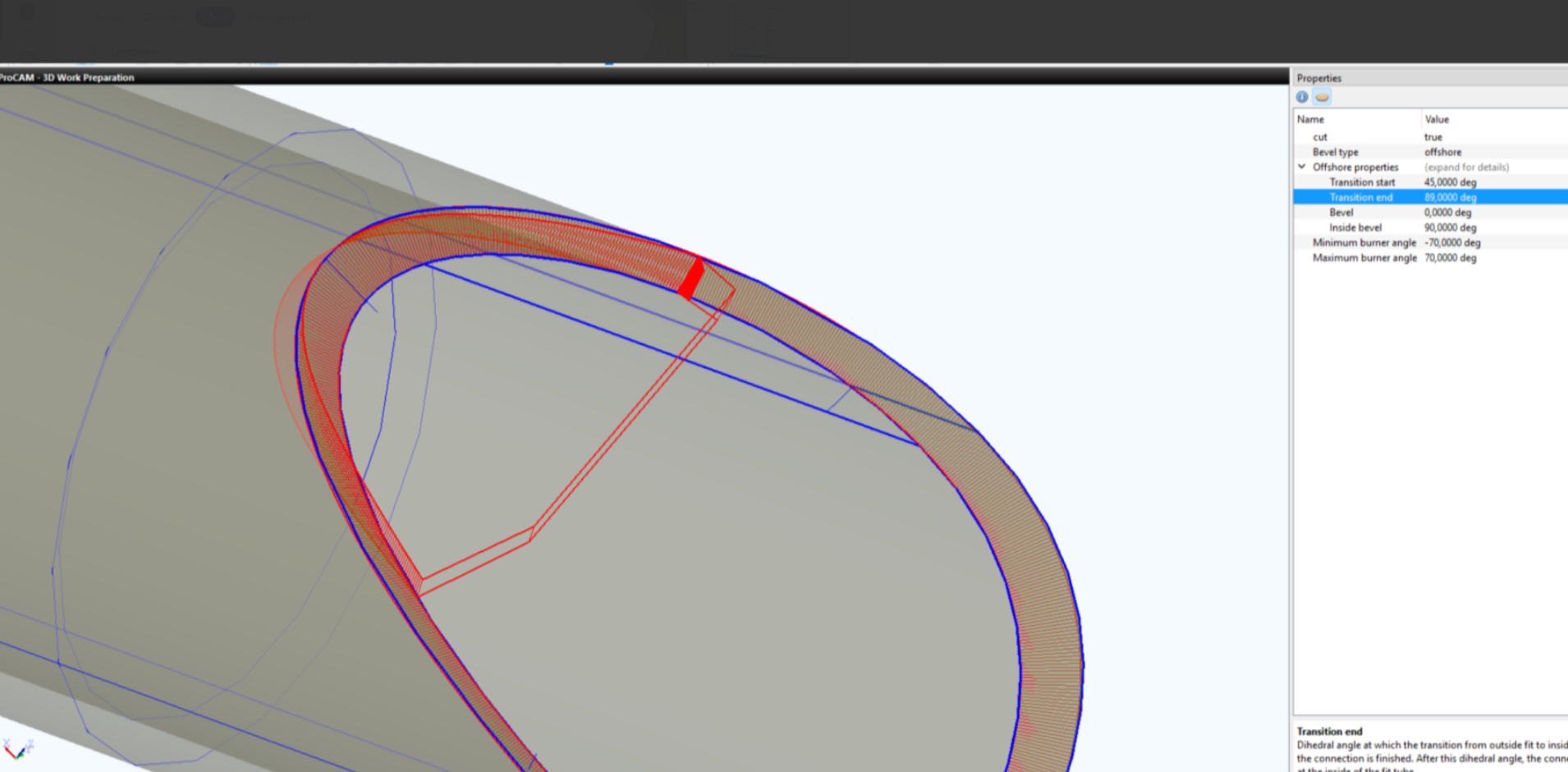
Operations such as bevel cutting, thicker sections or long continuous cuts can push the process outside its optimal range. While technically possible, these applications require careful process control and a higher level of expertise to achieve consistent results. - Tube and profile-specific challenges
In tube cutting, additional effects such as internal reflections, backside irradiation and piercing behaviour introduce extra complexity. These factors can influence cut quality on both the inside and outside of the profile, making it more challenging to achieve stable and predictable results.
In short: Laser performs best when the process is tightly controlled and becomes more demanding as application complexity increases.
Choosing the right process starts with your application
Discuss your production requirements with our experts and discover which cutting technology offers the best balance of quality, productivity and cost.
Choosing the right process starts with your application
Discuss your production requirements with our experts and discover which cutting technology offers the best balance of quality, productivity and cost.
Comparison Table: Laser vs plasma vs oxyfuel for steel profiles
Choosing the right cutting process for structural steel profiles comes down to five variables: material thickness, edge quality requirement, geometry complexity, production volume, and downstream weld preparation standard. The best fit for you is based on your processes and requirements.
The table below summarizes where each process performs best.
| Aspect | Laser cutting | Plasma cutting | Oxyfuel cutting |
|---|---|---|---|
| Applicable materials |
Most metals, incl. stainless steel, aluminum and carbon steel |
Electrically conductive materials | Carbon steel only |
| Material thickness | Best for thin to medium material | Strong in medium to thick materials | Best for very thick carbon steel |
| Bevel cutting |
Possible, but more process-sensitive; typically ≤45° |
Mature and robust, typically ≤45° |
Well established, >45° possible |
| Operator Skill Required | High | Low | Medium |
| Cutting speed | Very high in thin materials | High, across a broad thickness range | Lower, especially on thinner material |
| Marking | Yes | Yes | No |
| Achievable precision | Very high | Medium | Lower |
| Automation potential | Excellent | Good | Moderate |
| Process window |
Small, requires accurate parameter control |
Wide | Wide |
| Surface quality | Smooth surface, minimal dross |
Good, moderate roughness |
Good on thick material, oxide layer present |
| Geometry / feature size | Excellent for small holes, slots and complex contours | Good for general geometries | Best suited for larger and simpler geometries |
| Kerf width |
~0.5 – 1.5 mm ~0.02 – 0.06 in |
~1 – 8 mm ~0.04 – 0.31 in |
~1 – 6 mm ~0.04 – 0.24 in |
| Heat affected zone (HAZ) | Small | Medium | Large |
| Post-processing | Minimal |
Limited, some finishing required |
Possible, oxide removal and/or edge preparation may be required |
| Consumables | Few |
Many, regular replacement required |
Few |
Summarizing the best fit application:
- Laser cutting options: High-precision, controlled applications with consistent geometry
- Plasma cutting options: Versatile and robust production across varying conditions
- Oxyfuel cutting options: Very thick materials and heavy weld preparation
Which cutting technology is the right choice for your application?
Choosing the right cutting technology is not about selecting the most advanced option. It is about finding the solution that best fits your application, production environment, and business goals. In practice, that means balancing multiple factors rather than focusing on a single specification.
Ask yourself these five questions when selecting the right cutting process for steel profile fabrication:
- How thick is the material you need to cut?
Laser performs best in thin to medium materials. Plasma is effective across a wider thickness range, while oxyfuel remains the preferred choice for very thick sections. - How important are precision and robustness?
Laser offers high precision and clean results but requires controlled conditions. Plasma provides more tolerance to variation and is better suited for less controlled environments. Oxyfuel is highly robust and stable in heavy-duty applications. - What types of geometries and cuts do you produce?
Laser is ideal for precise features such as holes and straight cuts. Plasma handles variation and more complex geometries well. Oxyfuel is commonly used for heavier geometries and weld preparation. - How stable is your production environment?
Laser requires consistency in material and process conditions. Plasma is more forgiving in variable production environments. Oxyfuel performs reliably in demanding industrial conditions. - What are the requirements after cutting?
Laser enables high-quality fit-up with minimal post-processing. Plasma often requires some finishing but offers flexibility. Oxyfuel is typically used where weld preparation and heavy processing are required.
The bottom line? The right cutting technology is not determined by a single factor. It is the result of balancing material thickness, precision, geometry, production conditions, and downstream requirements to achieve the best combination of performance, robustness, and efficiency for your application.
Conclusion
Laser cutting is a powerful and precise technology with clear advantages. But like any cutting process, its success depends on how well it matches the application.
At HGG, we approach laser as part of a broader process landscape. Our focus is not just on the technology itself, but on the result, it delivers in production – from cut quality and fit-up to overall process stability. That is why we are actively exploring and developing laser cutting capabilities as part of our long-term roadmap. Our approach is process-driven: first understanding the process in depth, then developing the right machine and solution around it.
Laser can do a lot, but the real question is: can it do what you need it to do?
Frequently Asked Questions
Can you laser cut 3D steel profiles?
Yes, but with conditions. Multi-axis robotic laser systems can cut three-dimensional features on steel profiles such as beams, channels, and tubes. Performance is strongest on thin to medium thicknesses (3 to 20 mm or approx. 1/8–3/4 in) with controlled material conditions. For thicker structural sections or variable material batches, robotic plasma systems typically deliver more consistent results.
What can't you laser cut on steel profiles?
Laser cutting is generally not effective on highly reflective surfaces, thick mild steel above 25 to 30 mm (or 1–1¼ in) in routine production, or profiles with significant material variation.
Complex bevel cuts on thicker sections also fall outside laser’s optimal process window. For these applications, plasma or oxy-fuel cutting deliver more predictable results.
Is laser cutting better than plasma for steel profiles?
Not universally. Laser delivers higher precision and cleaner edges on thin to medium profiles (under 20 mm / 3/4 in), while plasma performs more robustly on thicker sections (above 25 mm / 1 in) and in variable production conditions.The right choice depends on tolerance requirements, material thickness, and downstream weld preparation.
Can laser cut bevels on beams for weld preparation?
Yes, but with limitations. Laser bevel cutting on thicker structural sections operates outside its optimal process window and requires careful control. For consistent bevel preparation on beams above 20 mm (or 3/4 in), robotic plasma systems designed for beam coping, such as HGG’s RPC-1200 MK3, typically produce more predictable results within AWS weld preparation requirements.
When should I choose oxyfuel over laser for steel profiles?
Oxyfuel remains the standard choice for steel sections above 30 mm (1¼ in) and for heavy weld preparation. Laser cutting is generally not cost-effective in this range. For structural projects requiring thick plate or beam coping with bevels, oxyfuel delivers robust performance at lower capital investment compared to highpower laser systems. For more on oxy-fuel cutting basics, See our dedicated article for more on oxy-fuel cutting basics.
Does HGG offer laser cutting machines for steel profiles?
HGG currently offers robotic plasma and oxyfuel cutting solutions across the RoboRail, APC, RPC-1200 MK3, PCL-600, and SPC machine families. Laser cutting is actively part of our long-term development roadmap. For projects requiring cutting today, our team advises on the right cutting process and partner solutions where applicable.
Choosing the right process starts with your application
Discuss your production requirements with our experts and discover which cutting technology offers the best balance of quality, productivity and cost.
Choosing the right process starts with your application
Discuss your production requirements with our experts and discover which cutting technology offers the best balance of quality, productivity and cost.


 Algeria
 Angola
 Benin
Benin Botswana
 Burkina Faso
 Burundi
 Cameroon
 Cape Verde
 Central African Republic
 Chad
Chad Comoros
 Congo
Congo Côte D'ivoire (Ivory Coast)
 Djibouti
 Egypt
Egypt Equatorial Guinea
 Eritrea
 Ethiopia
 Gabon
Gabon Gambia
 Ghana
Ghana Guinea
 Guinea-Bissau
 Kenya
Kenya Lesotho
 Liberia
 Libyan Arab Jamahiriya
 Madagascar
 Malawi
 Mali
Mali Mauritania
 Mauritius
 Mayotte
 Morocco
 Mozambique
 Niger
Niger Nigeria
 Rwanda
 Senegal
 Seychelles
 Sierra Leone
 Somalia
 South Africa
 Sudan
Sudan Swaziland
 Tanzania, United Republic of
 Togo
Togo Tunisia
 Uganda
 Zaire
Zaire Zambia
 Zimbabwe
 Afghanistan
 American Samoa
 Bangladesh
 Bhutan
 Brunei Darussalam
 Cambodia
 China
China East Timor
 Guam
Guam Hong Kong
 Indonesia
 Japan
Japan Korea, Democratic People's Republic of
 Korea, Republic of
 Lao People's Democratic Republic
 Macau
Macau Malaysia
 Maldives
 Mongolia
 Myanmar
 Nepal
Nepal Northern Mariana Islands
 Philippines
 Singapore
 Taiwan
 Thailand
 Vietnam
 Albania
 Andorra
 Armenia
 Austria
 Azerbaijan
 Belarus
 Belgium
 Bosnia and Herzegovina
 Bulgaria
 Croatia
 Cyprus
 Czech Republic
 Denmark
 Estonia
 Faroe Islands
 Finland
 France
 Georgia
 Germany
 Gibraltar
 Greece
 Greenland
 Hungary
 Iceland
 Ireland
 Israel
 Italy
Italy Kazakhstan
 Kyrgyzstan
 Latvia
 Liechtenstein
 Lithuania
 Luxembourg
 Macedonia, Republic of
 Malta
Malta Moldova, Republic of
 Monaco
 Montenegro
 Netherlands
 Norway
 Poland
 Portugal
 Romania
 Russian Federation
 San Marino
 Serbia
 Slovakia
 Slovenia
 Spain
Spain Sweden
 Switzerland
 Tajikistan
 Turkey
 Turkmenistan
 Ukraine
 United Kingdom
 Uzbekistan
 Aruba
Aruba Bahamas
 Barbados
 Belize
 Bermuda
 Cayman Islands
 Costa Rica
 Cuba
Cuba Curaçao
 Dominica
 Dominican Republic
 El Salvador
 French Polynesia
 Grenada
 Guadeloupe
 Haiti
Haiti Honduras
 Jamaica
 Martinique
 Mexico
 Monserrat
 Nicaragua
 Panama
 Pitcairn
 Puerto Rico
 Réunion
 Sint Maarten
 Trinidad & Tobago
 Bahrain
 India
India Iran
Iran Iraq
Iraq Jordan
 Kuwait
 Lebanon
 Oman
Oman Pakistan
 Qatar
Qatar Saudi Arabia
 Sri Lanka
 Syrian Arab Republic
 United Arab Emirates
 Yemen
Yemen Canada
 United States
 Australia
 New Zealand
 Papua New Guinea
 Samoa
Samoa Argentina
 Bolivia
 Brazil
 Chile
Chile Colombia
 Ecuador
 French Guiana
 Guyana
 Paraguay
 Peru
Peru Suriname
 Uruguay
 Venezuela
 EN
EN